Scenic pause / place before picture
PULL OVER WELL
A good stop gives the rider time to reset and leaves the road usable for everyone else. The view matters; so do the approach, parking surface, access rules and safe return to traffic.
Make stopping part of the route
Mountain touring naturally invites pauses: a summit panorama, a waterfall, a village square or a stretch of road framed by peaks. But the most obvious viewpoint is not automatically a suitable stopping place. A narrow shoulder can disappear around a bend. A gravel patch may slope away from the road. A small opening may be an entrance to a farm, trail or emergency access. Assess the place as a road user first, then as a visitor.
Plan a few possible stops before riding, using official viewpoints, public parking areas, visitor facilities and clearly signed lay-bys where permitted. Check restrictions for the road and area: rules may limit stopping, parking, access or photography in specific places. A route guide cannot confirm that a particular bay is open or available when you arrive. Follow signs and instructions from authorities, staff and local operators.
Evaluate the whole stopping manoeuvre
Before leaving the traffic stream, check that you have enough distance to signal and move without surprising anyone. Do not stop just beyond a blind crest or on the outside of a tight bend. Avoid blocking passing places on narrow roads. If the shoulder is soft, steep, loose or cambered, consider whether the motorcycle can be parked securely and retrieved without awkwardly entering traffic. A place that looks adequate from the saddle may have a hidden drop, drainage channel or loose edge.
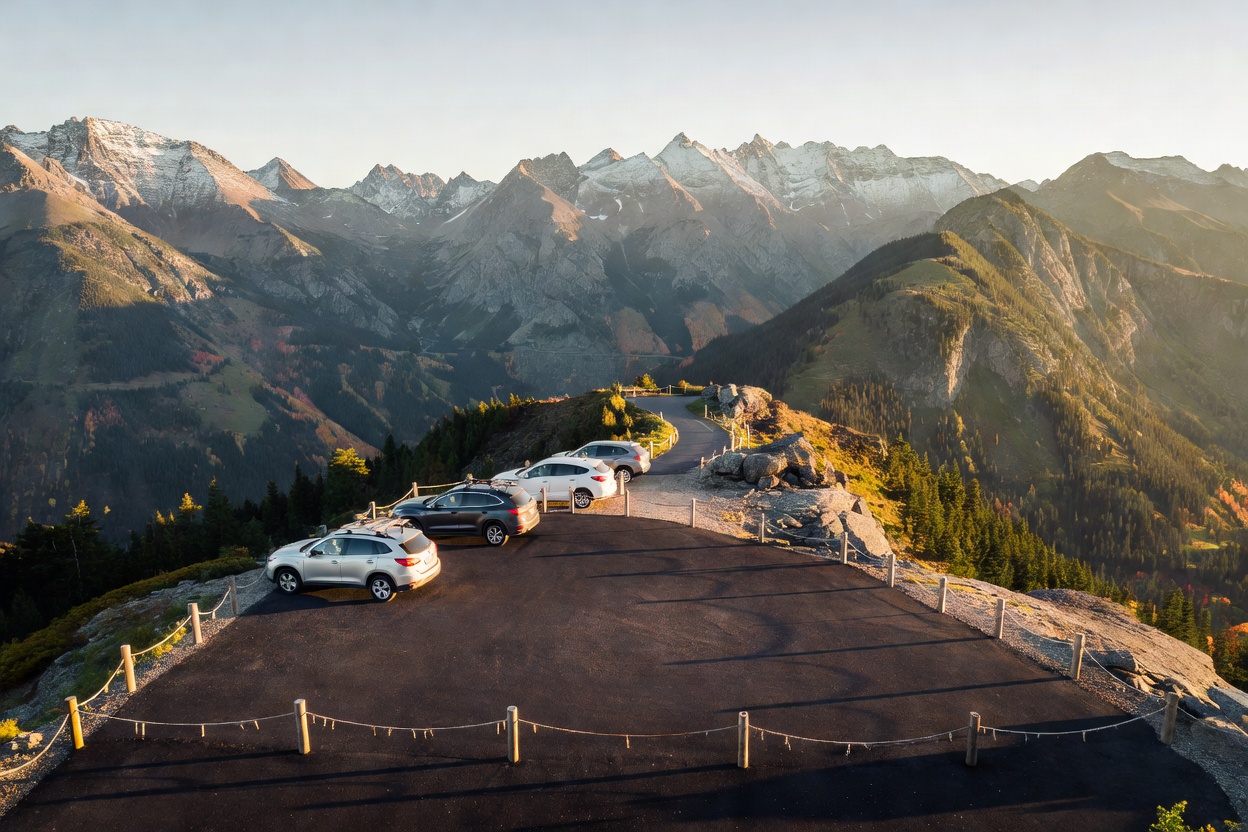
Once parked, position the motorcycle wholly within the marked area and clear of routes used by pedestrians, cyclists, emergency vehicles and service traffic. Use a stable surface and consider the slope before deploying the stand; a hot stand can sink into soft ground. Secure luggage and avoid leaving helmets or equipment where wind can carry them into the road. If the group has several motorcycles, use an established parking layout rather than spreading across the entrance or walkway.
Leaving deserves the same attention as arrival. Adjust mirrors, settle equipment and agree the next turn while parked. Re-enter only when there is a clear, legal gap and good visibility. Do not let a line of waiting riders create pressure to merge prematurely. If the exit is awkward, one rider at a time can rejoin while the others wait safely inside the parking area.
Photograph the view without becoming the hazard
Make a complete stop in an appropriate area before using a phone or camera. Do not photograph while riding, lean into the roadway for a better composition or walk on a live carriageway. Respect barriers, trail closures, private property and protected landscapes. A picture taken from a safe public viewpoint is more useful than one that depends on placing a person or machine in a traffic path.
Share location information responsibly. A quiet pull-off may not be designed for increased visitor numbers, and online attention can add pressure to a fragile site. Where a location has limited parking or sensitive natural features, follow local guidance and avoid encouraging riders to improvise roadside stops. Keep noise modest in villages and near homes; motorcycles pass through communities that are more than scenery.
Use breaks to manage the rider, not only the camera
Mountain roads ask for sustained observation, repeated braking and continuous choices about position and speed. A pause is an opportunity to drink water, adjust layers, check gloves and confirm that everyone feels alert. Heat, cold, altitude, vibration and concentration all affect comfort. Take a break before fatigue becomes a problem, rather than waiting until the next famous overlook. If a rider is cold, tense or mentally overloaded, extend the stop or choose a simpler route.
Group stops work best when agreed in advance. Choose obvious, legal meeting places that do not require riders to follow closely or catch up. If someone is delayed, the group should not assume they are safe simply because the road appears clear. Use a planned regrouping point and an agreed communication method. On narrow mountain routes, never gather across a lane or around a blind corner.
Respect shared places
Many scenic roads pass through working landscapes and protected areas. Keep gates closed, stay on marked paths and take litter away. Do not occupy accessible parking spaces, loading areas or spaces reserved for local residents unless the rules allow it. Watch for cyclists climbing slowly and pedestrians crossing to viewpoints. They may be difficult to see against changing light or behind roadside structures.
Some stops are popular because they are near a pass, lake or landmark; others are worth choosing because they make the day easier. A fuel station, shaded rest area or village café can be a better pause than a narrow turnout. The best stop is one that is safe, legal, considerate and useful to the next part of the ride. Leave enough time to enjoy the view without turning departure into a rush.
A practical pause check
- Is stopping and parking permitted here?
- Can you enter and exit with clear visibility and room?
- Is the surface stable, and is the motorcycle clear of traffic and access routes?
- Can the group wait without occupying a lane, path or emergency access?
- Have riders reset layers, hydration, route and attention before continuing?