Touring brief / useful margin over ambition
PACK FOR THE CROSSING
A good mountain day is built around attention, daylight and room to adapt—not a target distance. Prepare the motorcycle, the route and the people riding it, then make it easy to change the plan.
Set a realistic day shape
Mountain mileage tends to take longer than a similar distance on open roads. Bends, settlements, slow traffic, construction controls and photo stops all interrupt the average pace. Map estimates rarely include the full cost of repeated direction changes or the time needed to pause and reset. Choose a route that leaves room for meals, fuel, delays and an early end if conditions worsen. A shorter crossing ridden with attention is a better touring day than a crowded schedule that depends on everything going exactly right.
Start by identifying the fixed points: accommodation, booked transport, a time-sensitive opening or a necessary fuel stop. Then look at the flexible parts. Can a pass be removed without making the day fail? Is there a lower route if weather closes in? Are there alternative towns where the group can stop? Mark a few safe regrouping and rest locations, but avoid planning stops on narrow shoulders or at blind corners. The scenic-pauses guide offers a practical test for choosing places once you are on the road.
Keep the first riding section modest. A calm start allows everyone to settle into the motorcycle, clothing and group rhythm before the road becomes more demanding. If you arrive tired after a long transfer, do not assume that a famous pass is the right way to finish the day. Fatigue can narrow attention and increase the chance of poor decisions, especially when the road repeatedly asks for braking, steering and careful observation.
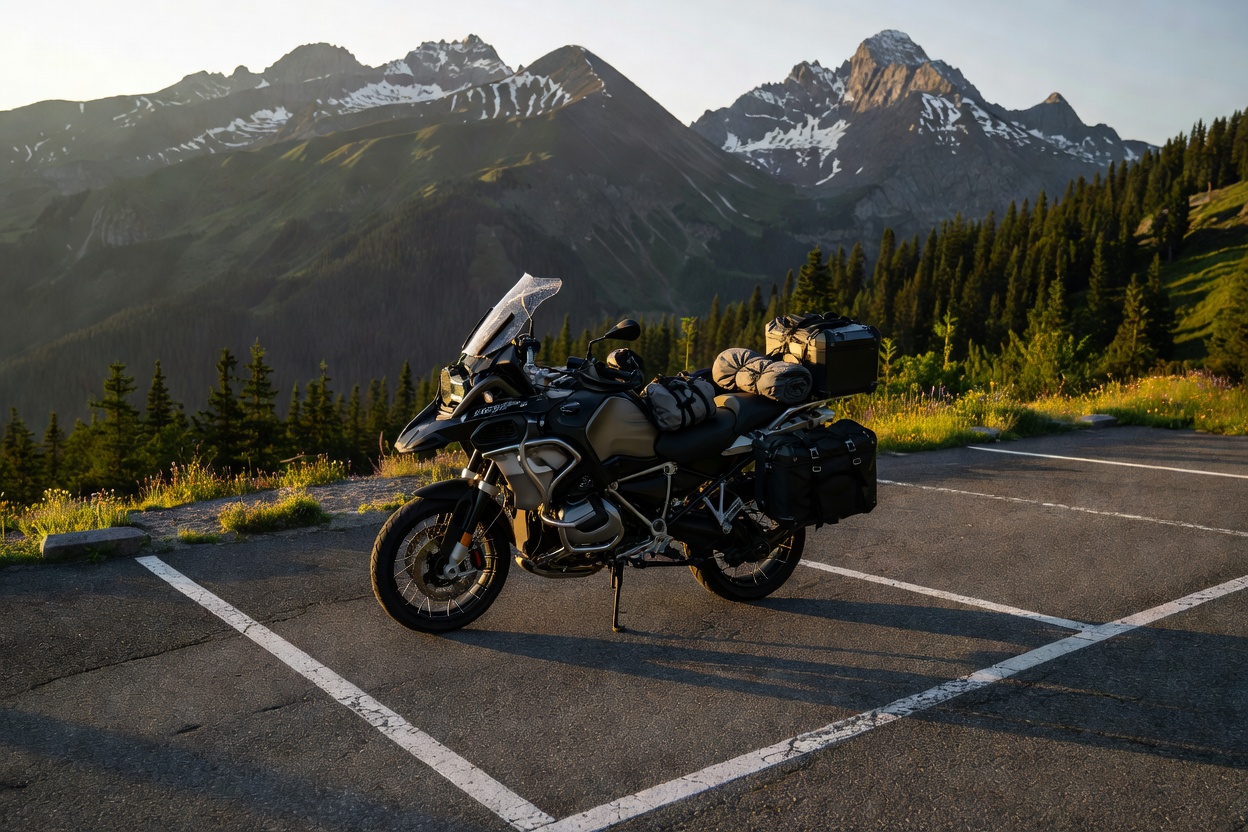
Prepare the motorcycle and rider
Before departure, follow the motorcycle manufacturer’s inspection guidance. Check tyre condition and pressure, brakes, lights, controls, mirrors, chain or final drive as applicable, fluid levels, luggage security and any warning indicators. A maintenance check is not a substitute for proper servicing. If something feels or sounds wrong, address it before committing to an isolated route. Carry only equipment you can secure correctly and that is appropriate for the motorcycle and journey.
Mountain conditions can vary sharply between valleys and exposed elevations. Wear protective equipment suitable for the forecast and local requirements, with layers that can be adjusted while parked. Waterproofing, warm gloves and an additional insulating layer can make a significant difference if temperature falls or rain arrives. Protect your eyes from glare and changing light. Keep water accessible, and plan meals and breaks before concentration falls away.
Pack essential personal medication and emergency contact details in a secure, accessible way. Carry a charged phone and charging method; consider offline maps where coverage may be unreliable. A first-aid kit and basic repair items are useful only if you know how to use them and can carry them securely. Do not let equipment or luggage interfere with steering, suspension, visibility or access to controls.
Make weather and access checks routine
Check forecasts for the route’s elevations, not just the departure town. Mountain weather can change quickly, and adjacent valleys may have different conditions. Look at expected temperature, precipitation, wind and visibility, then consider how the combination affects the ride. Rain after a dry spell may lift contaminants; showers can hide surface changes; low cloud can reduce the view through a bend. A forecast is guidance rather than a promise.
Confirm access status with the road authority or operator shortly before departure. Seasonal opening dates are not a guarantee of current passage. Snow, frost, rockfall, maintenance, events and emergency works can alter access. Check local restrictions, operating hours, toll or ticket information where relevant, and official notices for the route. Follow temporary signs and instructions once riding. This site provides enduring context and is not a live road-status service.
Build a clear threshold for changing plans. Examples include a closure, deteriorating visibility, strong crosswinds, a late start, a mechanical concern or a rider who no longer feels comfortable. Agree that any rider can call for a pause or route change without debate. Identify lower, simpler alternatives and ensure the group can find a safe place to discuss a change.
Tour together without pressure
Before departure, talk through the route, planned stops, navigation, fuel, regrouping and communication. Keep the pace within each rider’s comfort and experience. A group should not rely on close following or a faster rider’s line as a guide. Leave generous space, allow each person to choose a safe position and do not turn a pass into a contest. If the group uses lead and sweep roles, agree them in advance and ensure those riders understand their responsibilities.
Choose meeting points that are obvious and safe, such as established parking areas or services. If the group becomes separated, continue to the next agreed point rather than speeding to catch up. Use a phone or another agreed method when stopped safely. Do not make route changes while moving or assume everyone has seen a hand signal in traffic. A simple plan reduces stress without requiring every rider to stay in a tight formation.
Be prepared to split the group if riders have different pace preferences or stamina, but agree the arrangement and meeting place first. Check that no one is left without a route or support. On narrow roads, allow space for local traffic, cyclists and emergency vehicles. Courtesy and predictability improve the experience for everyone sharing the crossing.
Protect time for the descent
Riders often devote most planning attention to the ascent and summit, then hurry the descent to meet a schedule. Make the return section part of the plan from the start. A descent can involve sustained braking, repeated bends, changing light and traffic entering from side roads. Fatigue may appear after the high point, when the group feels the main task is already complete. Pause at a suitable place, reassess weather and energy, then continue with enough time in hand.
Do not assume the reverse direction is simply the same ride backwards. It presents different sight lines, grades, junctions and visual cues. Conditions can also change while you are stopped. If rain or cloud arrives, reduce the day’s ambition. If the route is blocked or a rider is uncomfortable, use an official alternative rather than improvising across restricted roads.
Carry a compact decision checklist
- Motorcycle inspection completed to the manufacturer’s guidance; luggage secured.
- Official access and weather information checked close to departure.
- Fuel, breaks, daylight and a lower-stress alternative included in the plan.
- Group roles, regrouping points and a no-pressure pace agreed.
- Protective layers, water, phone power and personal essentials packed.
- Every rider knows that stopping, turning back or changing route is acceptable.